SATEC BFM-II Branch Feeder Monitor for Multi-Circuit Power and Energy Metering

SATEC BFM-II is a modular branch feeder monitor for high-density, multi-circuit power and energy metering. Designed for distribution panels, it enables circuit-level visibility, tenant sub-metering and feeder load analysis in commercial, industrial and data-centre environments.

SATEC BFM-II is a branch feeder monitor designed for multi-circuit power and energy metering at panel and distribution level.

It enables detailed monitoring of multiple outgoing feeders from a single device, providing visibility into energy consumption, load behaviour and electrical parameters across individual circuits, without the need for multiple individual meters.
This branch feeder monitor is typically used where standard meters cannot provide sufficient granularity, such as commercial buildings, data centres, industrial panels and multi-tenant installations. By combining high-accuracy current sensing with flexible communications and open protocols, it supports both operational monitoring and energy management applications without adding unnecessary system complexity. For full installation and configuration details, see the official BFM-II Installation and Operation Manual   BFM-II branch feeder monitor features – multi-circuit energy metering, open protocols, modular I/O and fault recording

Key functions
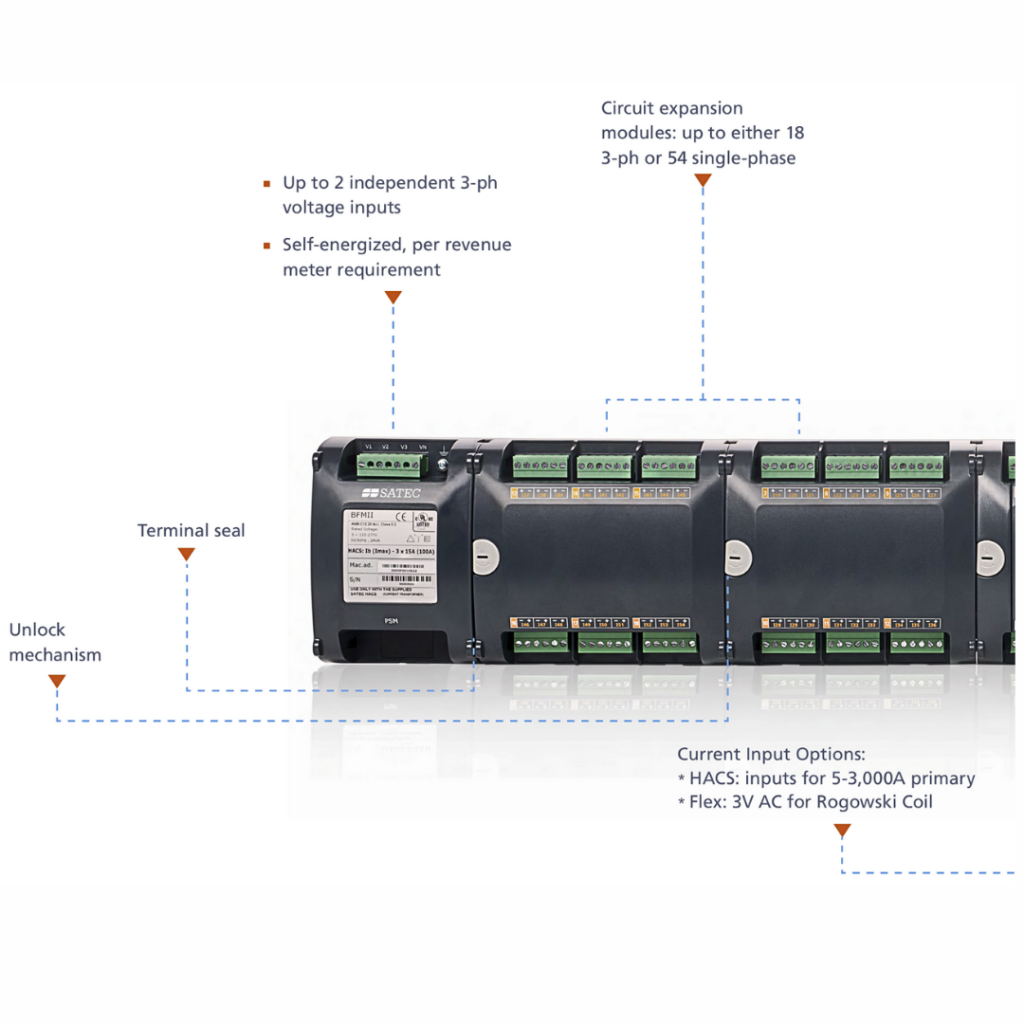
  • Multi-circuit metering in a single platform – supports monitoring of up to 54 single-phase or 18 three-phase circuits within one device, suitable for both new installations and retrofit projects.
  • Branch-level visibility – per-circuit measurement of voltage, current, power and energy, providing insight into load distribution across outgoing feeders and final distribution boards.
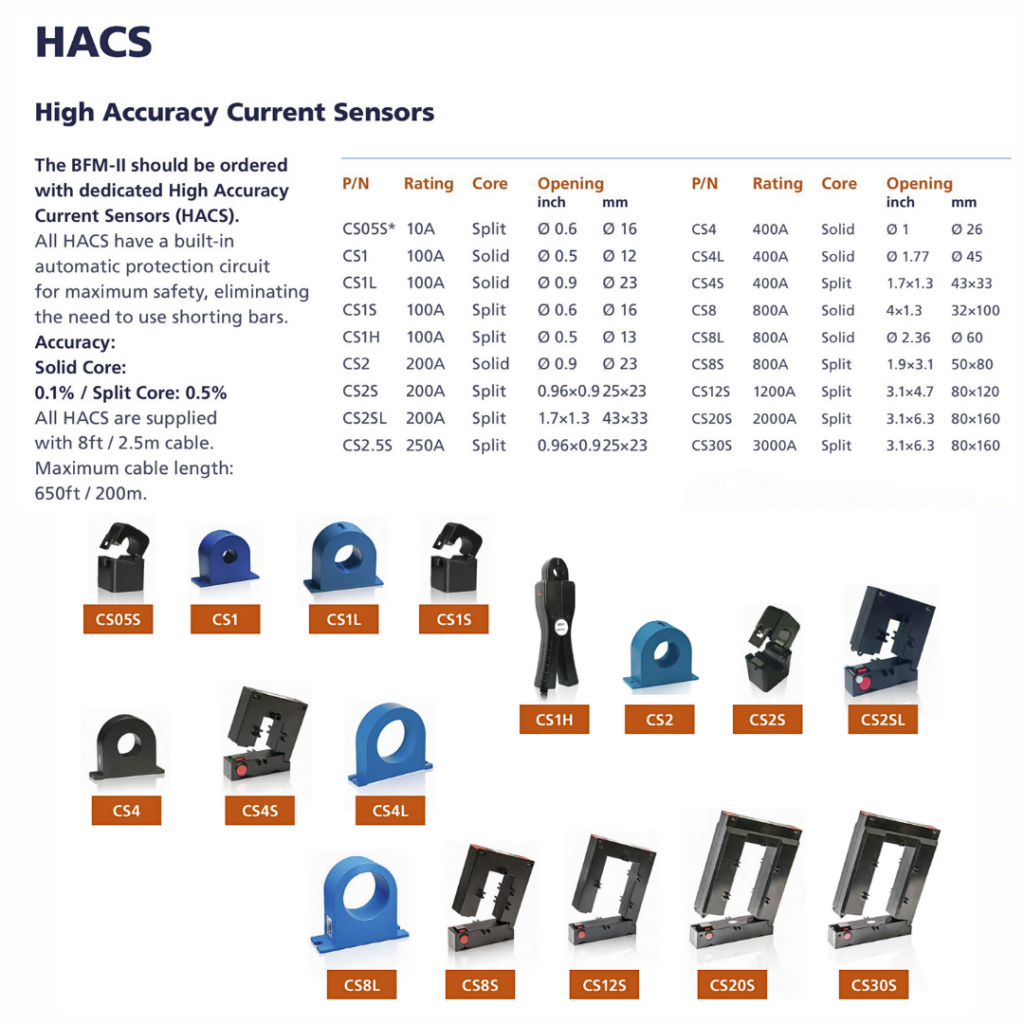
  • Flexible current input options – compatible with SATEC High Accuracy Current Sensors (HACS), retrofit split-core solutions and third-party current transformers, depending on configuration.
  • Billing and Time-of-Use (TOU) energy metering – supports multi-tariff energy and demand registers, tariff schedules and daily profiles for sub-metered circuits.
  • Harmonic monitoring – individual voltage and current harmonics up to the 25th order, including THD, TDD and K-Factor measurements.
  • Event and data recording per channel – non-volatile storage of time-stamped events and configurable data logs for each monitored circuit.
  • Digital Fault Recorder (DFR) option – waveform capture and fault recording for current and voltage inputs, available as a dedicated product variant.
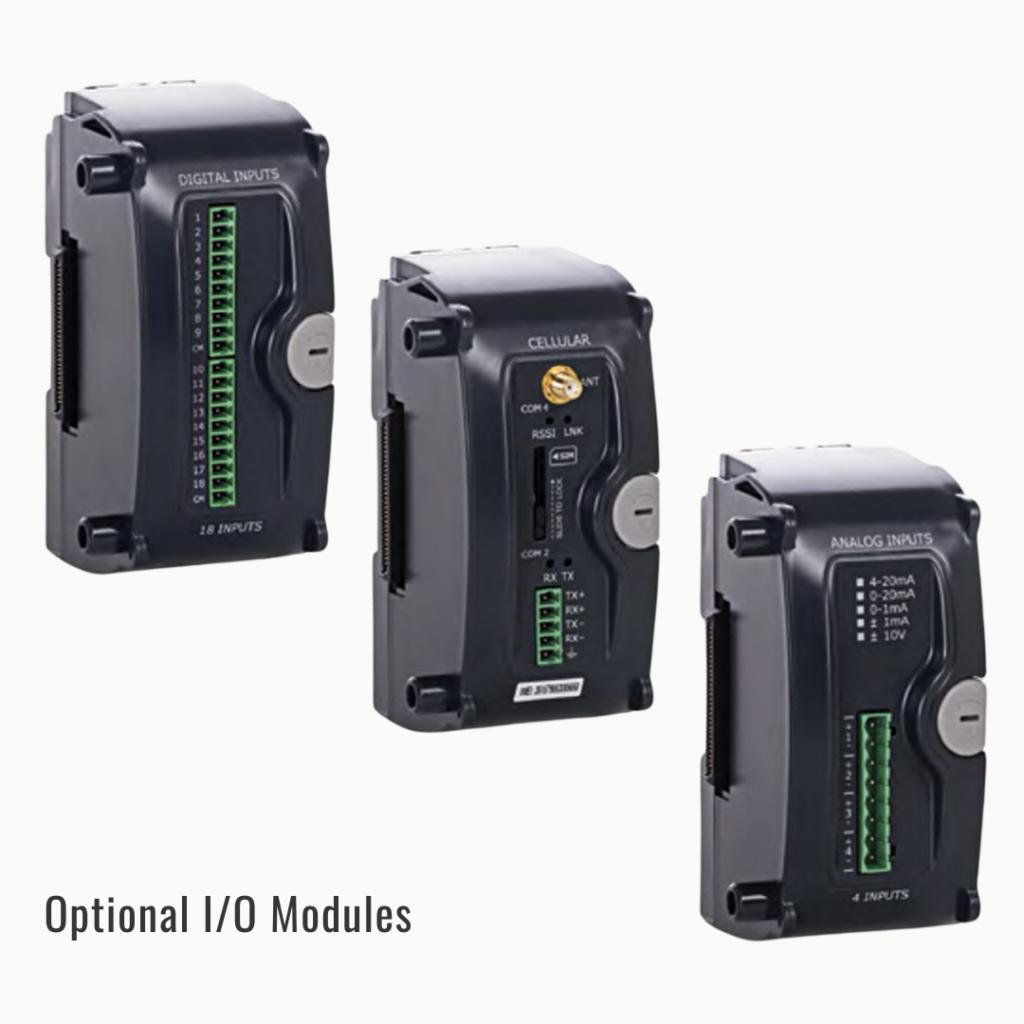
  • Modular I/O expansion – optional digital inputs, relay outputs and analogue inputs for status monitoring, pulse collection and analogue signals.
  • Security and access control – multi-level password protection for meter configuration and stored data.
Measurement inputs and I/O
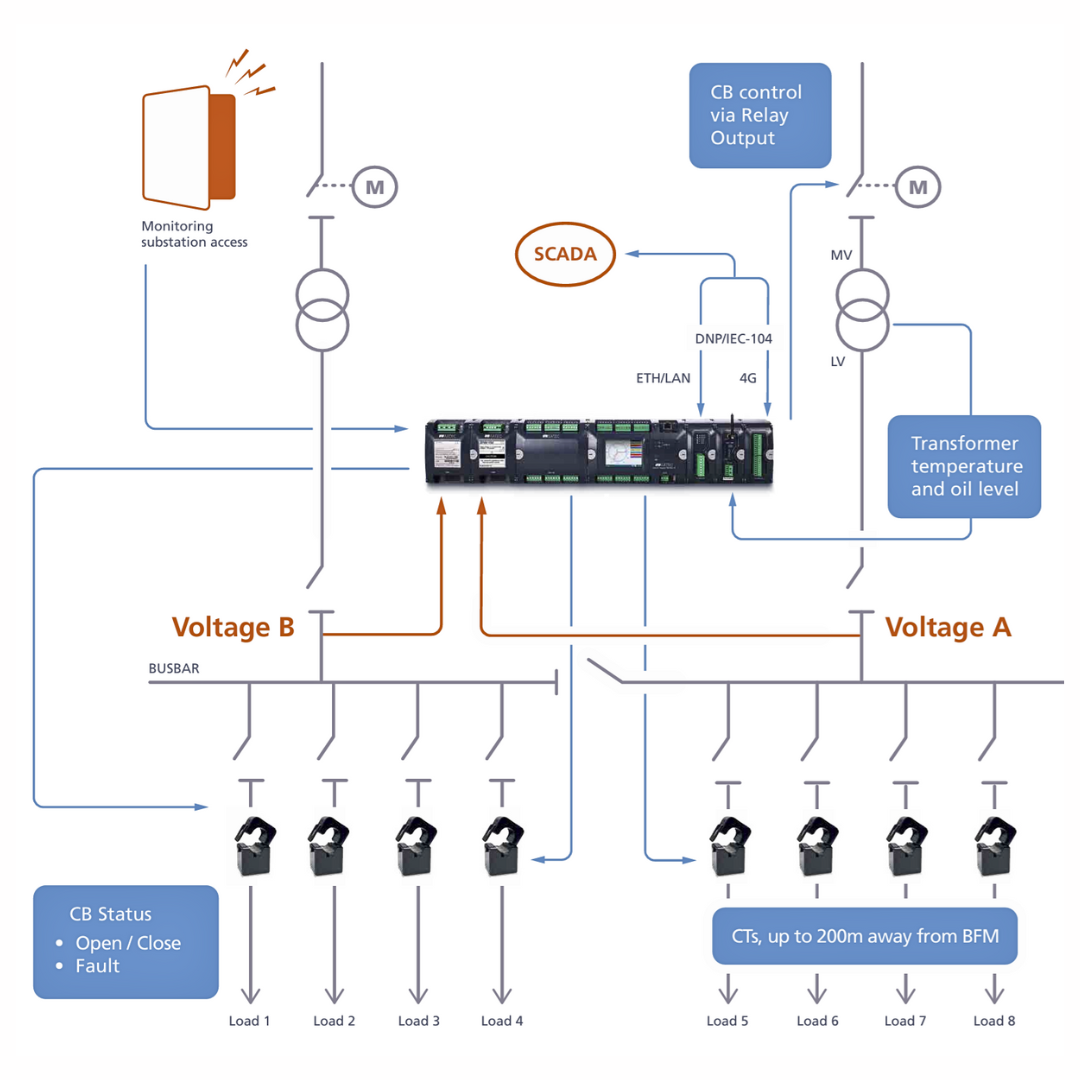
Voltage inputs SATEC BFM-II branch feeder monitor supports direct three-phase voltage measurement on low-voltage distribution systems. An optional second voltage input set allows monitoring of parallel or dual-source supplies, so measured currents are referenced to the correct voltage source. Current inputs This multi-circuit metering unit uses modular current input options to suit different switchboard and panel arrangements. Depending on the selected input modules, it can be used with SATEC High Accuracy Current Sensors (HACS) for high-density circuit monitoring, retrofit split-core sensors for existing panels, or third-party current transformers. Digital and analogue I/O Optional I/O modules support straightforward integration. Digital inputs are typically used for status indication, pulse collection and breaker monitoring, while relay outputs provide signalling and basic control. Analogue input modules allow external sensors and process signals to be brought into the same monitoring point where required. Communications and system integration This branch feeder monitor is intended for use in metering, energy management and monitoring systems. Standard interfaces include RS-485 and Ethernet, with optional cellular connectivity where remote access is needed. Open protocols suit typical SCADA, BMS and EMS environments, including Modbus, DNP3, BACnet and IEC 60870-5-101/104, depending on configuration. Harmonics, events and recording For distribution-level monitoring, the device includes harmonic measurement and event recording. It supports individual voltage and current harmonics up to the 25th order, alongside distortion indicators such as Total Harmonic Distortion (THD), Total Demand Distortion (TDD) and K-Factor.

Built-in data and event recorders store time-stamped measurements and operational events for each monitored circuit. This supports trend analysis, diagnostics and post-event review without relying on continuous polling from the supervisory system.

Typical applications
  • Commercial and multi-tenant buildings – circuit-level energy metering for tenant sub-metering, load allocation and operational visibility at distribution board level.
  • Data centres and critical facilities – branch feeder monitoring of outgoing feeders to track load distribution, detect imbalance and support capacity planning across panels and racks.
  • Industrial distribution panels – multi-circuit monitoring of production lines, auxiliary systems and outgoing feeders where a single meter per circuit is impractical.
  • Retail centres and office complexes – detailed insight into energy consumption across multiple final circuits for cost allocation and operational optimisation.
  • Retrofit projects – installations where existing panels must be monitored without major rewiring, using split-core current sensors and modular input configurations.

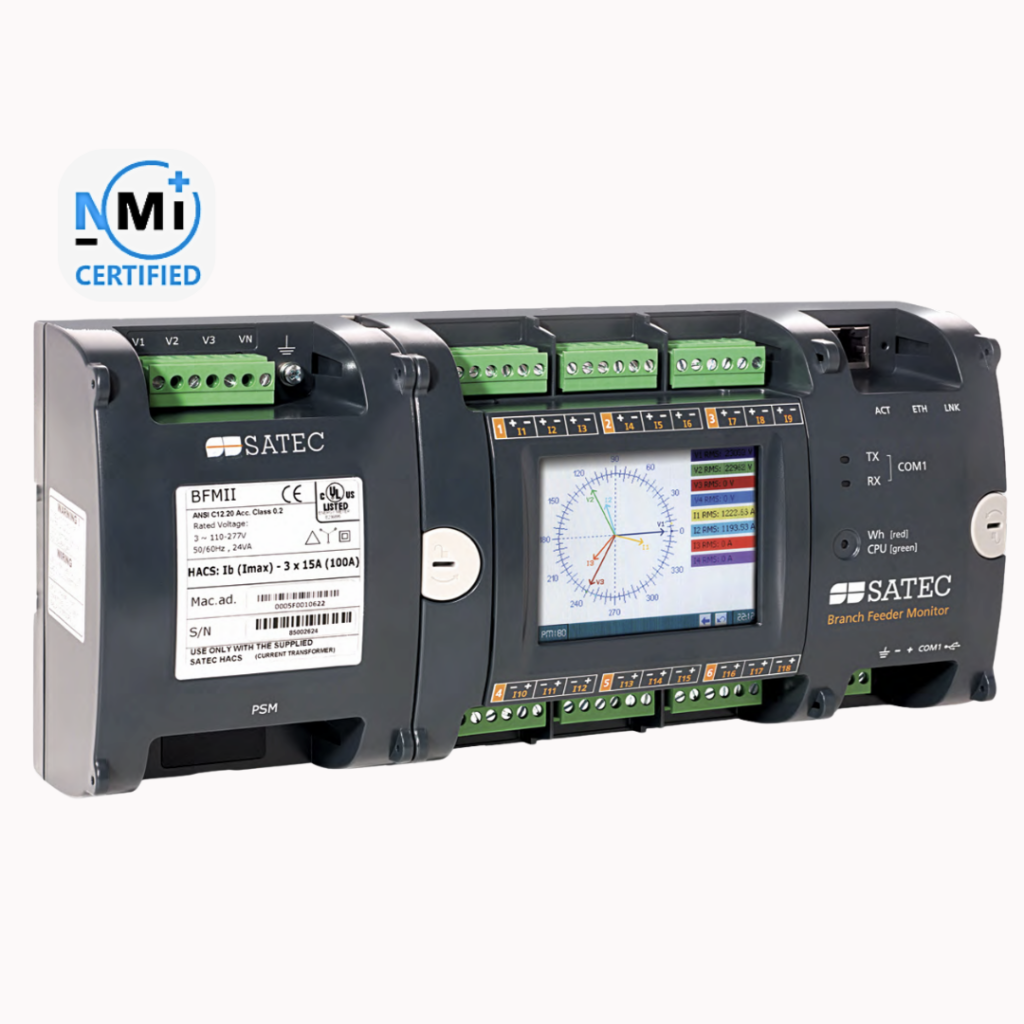
SATEC BFM-II is a branch feeder monitor designed for multi-circuit power and energy metering at panel and distribution level.

It enables detailed monitoring of multiple outgoing feeders from a single device, providing visibility into energy consumption, load behaviour and electrical parameters across individual circuits, without the need for multiple individual meters.
This branch feeder monitor is typically used where standard meters cannot provide sufficient granularity, such as commercial buildings, data centres, industrial panels and multi-tenant installations. By combining high-accuracy current sensing with flexible communications and open protocols, it supports both operational monitoring and energy management applications without adding unnecessary system complexity. For full installation and configuration details, see the official BFM-II Installation and Operation Manual   BFM-II branch feeder monitor features – multi-circuit energy metering, open protocols, modular I/O and fault recording
Key functions
  • Multi-circuit metering in a single platform – supports monitoring of up to 54 single-phase or 18 three-phase circuits within one device, suitable for both new installations and retrofit projects.
  • Branch-level visibility – per-circuit measurement of voltage, current, power and energy, providing insight into load distribution across outgoing feeders and final distribution boards.
  • Flexible current input options – compatible with SATEC High Accuracy Current Sensors (HACS), retrofit split-core solutions and third-party current transformers, depending on configuration.
  • Billing and Time-of-Use (TOU) energy metering – supports multi-tariff energy and demand registers, tariff schedules and daily profiles for sub-metered circuits.
  • Harmonic monitoring – individual voltage and current harmonics up to the 25th order, including THD, TDD and K-Factor measurements.
  • Event and data recording per channel – non-volatile storage of time-stamped events and configurable data logs for each monitored circuit.
  • Digital Fault Recorder (DFR) option – waveform capture and fault recording for current and voltage inputs, available as a dedicated product variant.
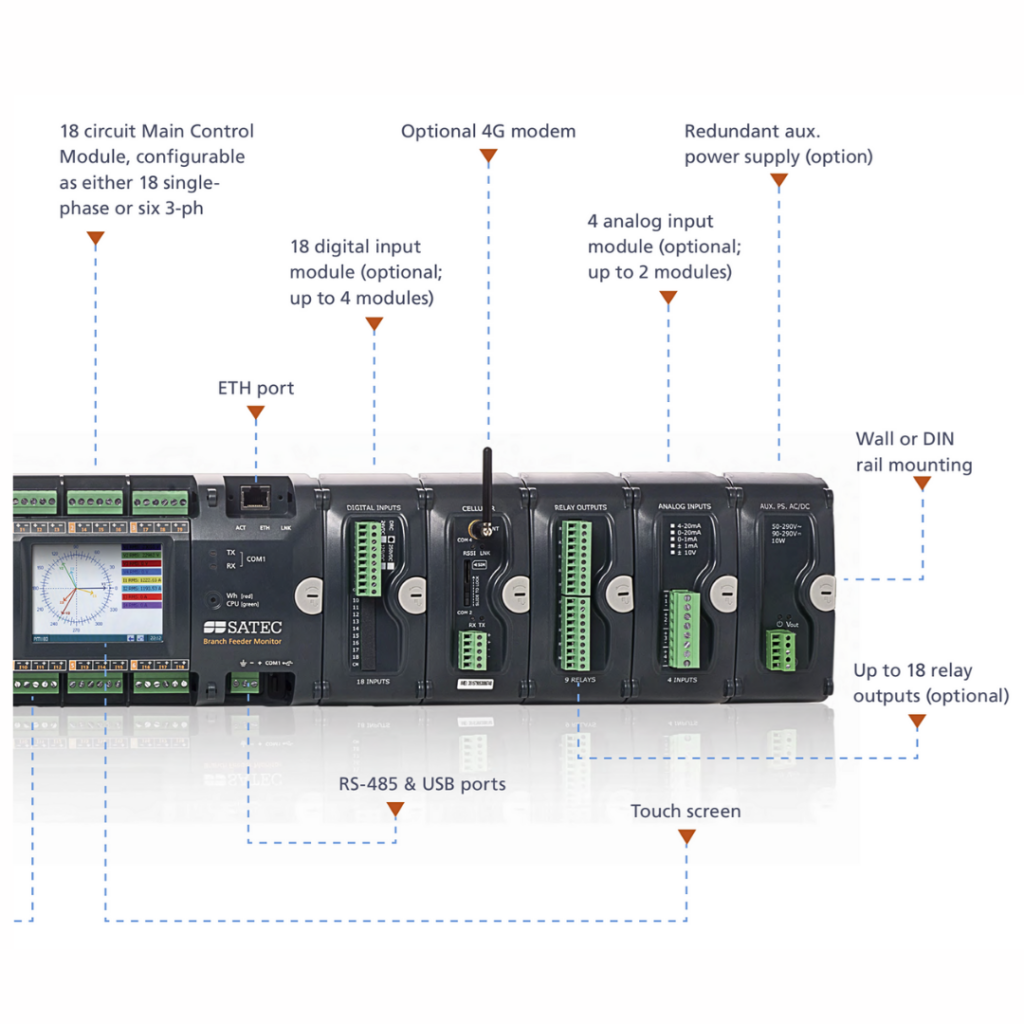
  • Modular I/O expansion – optional digital inputs, relay outputs and analogue inputs for status monitoring, pulse collection and analogue signals.
  • Security and access control – multi-level password protection for meter configuration and stored data.
Measurement inputs and I/O
Voltage inputs SATEC BFM-II branch feeder monitor supports direct three-phase voltage measurement on low-voltage distribution systems. An optional second voltage input set allows monitoring of parallel or dual-source supplies, so measured currents are referenced to the correct voltage source. Current inputs This multi-circuit metering unit uses modular current input options to suit different switchboard and panel arrangements. Depending on the selected input modules, it can be used with SATEC High Accuracy Current Sensors (HACS) for high-density circuit monitoring, retrofit split-core sensors for existing panels, or third-party current transformers. Digital and analogue I/O Optional I/O modules support straightforward integration. Digital inputs are typically used for status indication, pulse collection and breaker monitoring, while relay outputs provide signalling and basic control. Analogue input modules allow external sensors and process signals to be brought into the same monitoring point where required. Communications and system integration This branch feeder monitor is intended for use in metering, energy management and monitoring systems. Standard interfaces include RS-485 and Ethernet, with optional cellular connectivity where remote access is needed. Open protocols suit typical SCADA, BMS and EMS environments, including Modbus, DNP3, BACnet and IEC 60870-5-101/104, depending on configuration. Harmonics, events and recording For distribution-level monitoring, the device includes harmonic measurement and event recording. It supports individual voltage and current harmonics up to the 25th order, alongside distortion indicators such as Total Harmonic Distortion (THD), Total Demand Distortion (TDD) and K-Factor.

Built-in data and event recorders store time-stamped measurements and operational events for each monitored circuit. This supports trend analysis, diagnostics and post-event review without relying on continuous polling from the supervisory system.

Typical applications
  • Commercial and multi-tenant buildings – circuit-level energy metering for tenant sub-metering, load allocation and operational visibility at distribution board level.
  • Data centres and critical facilities – branch feeder monitoring of outgoing feeders to track load distribution, detect imbalance and support capacity planning across panels and racks.
  • Industrial distribution panels – multi-circuit monitoring of production lines, auxiliary systems and outgoing feeders where a single meter per circuit is impractical.
  • Retail centres and office complexes – detailed insight into energy consumption across multiple final circuits for cost allocation and operational optimisation.
  • Retrofit projects – installations where existing panels must be monitored without major rewiring, using split-core current sensors and modular input configurations.
Delivering Smart Energy, Made Simple.

Request A Quote